




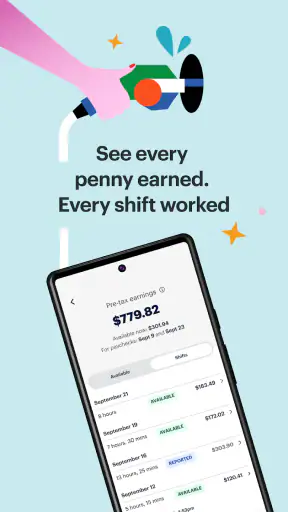

Getting paid before the normal payday can sound simple, but the useful question is whether the process fits the way you actually manage money. I spent time looking at DailyPay On-Demand Pay as a finance app, and my impression is that its value comes from timing rather than from helping you earn more. It is built for people who already have wages coming in and want access to money they have earned before the usual deposit date.
DailyPay On-Demand Pay is developed by DailyPay Inc and is free to install. That makes the first step easy to consider, especially if your employer supports the service. Its store rating is a 4.7 average from around 238 thousand ratings, with about 19 thousand written reviews and over 1 million installs. Those figures suggest that many people find the basic idea useful, but they do not replace the more important question: will it work with your employment situation and your personal cash-flow habits?
How DailyPay fits into everyday money management
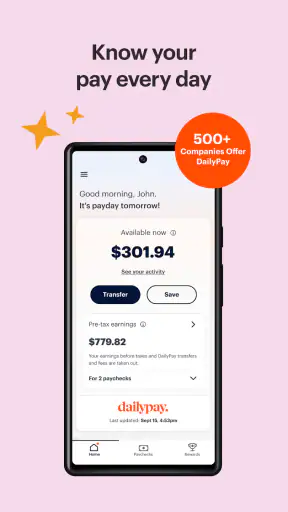
The app’s central purpose is early access to earned wages. Instead of waiting for the next scheduled payday, an eligible worker can use the app to look at wages already earned and decide whether bringing some of that money forward makes sense. I see it less as a budgeting app and more as a timing tool that can sit between work and a traditional bank account.
That distinction matters. DailyPay is not a replacement for regular income, and it should not be treated like extra money. If I use early access to cover a bill today, the next normal paycheck may be smaller because part of those wages has already been received. The app can smooth a short gap, but it cannot remove the underlying expense or make an irregular income pattern stable.
The app is listed for Everyone, and it is free to download. It was released on December 7, 2018, and the current version is 52.0.0 for devices running operating system 9 or later. Those details make it accessible to a broad range of phone users, although access to the wage service itself is the practical issue. A person may be able to install the app and still need an eligible employment arrangement before its main purpose becomes useful.
What “free” means when the value is about timing
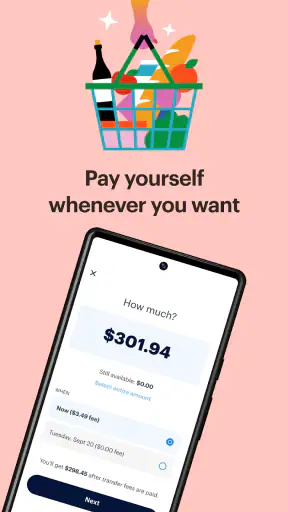
The clearest confirmed cost fact is that the app itself is free. I would not confuse that with a promise that every way of receiving money through the service has no cost. The sensible approach is to examine the amount shown during the transaction and understand exactly what you are choosing before confirming it. Free installation is certain; the value of any particular transfer depends on the terms presented for that action.
This is where DailyPay requires more attention than a normal free budgeting app. With a spending tracker, downloading the app may be the main financial decision. With on-demand wage access, the important decision happens each time you move money before payday. I would treat every transfer as an advance against an upcoming paycheck, not as a free convenience.
For someone facing a late utility payment or a necessary trip to work, paying for speed may be reasonable if the alternative is a larger penalty or a serious disruption. For a casual purchase, the same choice can become expensive in a less obvious way: the immediate problem disappears, but the next payday has less room. The right comparison is therefore not simply “free app versus paid app.” It is “early access now versus waiting, using savings, or choosing another way to handle the expense.”
A realistic payday-gap example
Imagine I have worked several shifts, but my regular payday is still a few days away. My car needs fuel so I can get to the next shift, and a scheduled bill is due before my paycheck arrives. I could use DailyPay to access part of the wages already earned, solve the immediate problem, and continue working. In that situation, the app addresses a genuine timing issue rather than encouraging me to borrow for something optional.
Now change the situation slightly. Suppose I want early access because I have spent most of my available money on entertainment and do not want to wait. The app may still make the money available, but I would be shifting the same pressure into the following pay cycle. My personal verdict in that case would be to skip the transfer and use the experience as a signal to adjust the budget instead.
This is one of the most important habits for using the service responsibly: decide the reason before opening the app. If the reason is an essential expense with a clear repayment point, early wage access can be practical. If the reason is simply that money feels available, the app can make an existing spending problem easier to repeat.
Where the app delivers real value
The strongest benefit is flexibility between paydays. Traditional payroll is organized around a fixed schedule, while household expenses rarely arrive in a neat pattern. A worker may have enough earned income overall but still face a mismatch between the day a bill is due and the day wages are deposited. DailyPay is designed for that mismatch.
I also think it can be useful for people who are trying to avoid more disruptive options. A small, clearly understood early wage transfer may be preferable to missing work because of transportation costs or allowing an essential account to fall behind. That does not make every transfer a good idea, but it gives the app a practical role when the timing problem is temporary and specific.
Another strength is that the app puts the decision in a mobile workflow rather than requiring a worker to wait for a payroll office conversation each time money is tight. That can be valuable for people with changing schedules, hourly work, or expenses that do not line up with a fixed monthly budget. The convenience is meaningful because the problem DailyPay addresses is often urgent by nature.
Its large user base and strong average rating also make it easier to see why the concept appeals to people. Still, I would not use popularity as proof that it is right for me. A person who already has a reliable emergency fund may gain little from moving wages forward, while someone living close to the edge may gain much more from the same function.
Three practical ways to avoid using it poorly
First, I would reserve early access for a named expense. Before requesting money, I would write down what it is for and the date it must be paid. This simple step separates a short-term cash-flow solution from an impulse withdrawal. It also makes it easier to judge whether waiting would actually be harmful.
Second, I would look at the next payday as a reduced-payday event whenever I use the feature. Even if the app makes the process feel quick, the money is still coming from wages connected to work already performed. I would leave enough of the upcoming paycheck for rent, food, transportation, and recurring bills instead of treating the remaining balance as spending money.
Third, I would watch for repetition rather than judging each transfer in isolation. One emergency use may be manageable. Reaching for early wages every pay cycle suggests that income and expenses are not lining up, and the app alone will not solve that. In that case, a conversation with payroll, a revised bill schedule, a basic spending plan, or a conventional savings buffer may be more valuable than continued on-demand access.
Questions I would answer before signing in
The first question is whether my employer and work arrangement support DailyPay. Installing the app is not the same as being able to use its main service. I would check that point early, because the app’s usefulness depends on the connection between the worker, payroll information, and the service.
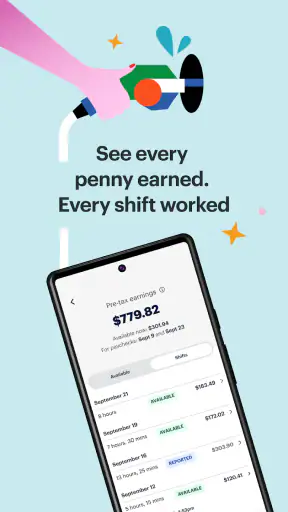
The second question is how much of my earned pay can actually be accessed at a given moment. I would not assume that every dollar connected to completed work will appear immediately. The amount shown in the app is the amount I would use for planning, not an estimate based on my own timesheet.
The third question is how quickly the money will arrive through the option I select and whether that option has a charge. Timing is the whole reason to use DailyPay, so I would read the confirmation screen carefully instead of tapping through it. If I can wait, I would compare that choice with the cost and consequences of receiving money sooner.
The fourth question is what happens to my regular paycheck after an early transfer. I would plan around the remaining amount rather than the original expected paycheck. That is especially important when deductions, variable hours, or recurring bills are already difficult to predict.
The fifth question is whether I need an on-demand pay service at all. If I have accessible savings, a stable buffer, or a biller that can move the due date, those alternatives may preserve more of my next paycheck. DailyPay is most compelling when the timing problem is real and the alternative is worse, not simply because the app is convenient.
How it compares with ordinary alternatives
A standard banking app gives me access to money already deposited, but it normally cannot change the employer’s payday schedule. DailyPay’s distinct appeal is the connection to earned wages before that deposit. A budgeting app can show where money goes and help plan upcoming bills, but it does not solve a same-week shortage by itself. These tools may work alongside one another, yet they serve different purposes.
An emergency fund is usually the healthier long-term alternative because it does not reduce the next paycheck. The drawback is that it takes time to build and may not exist when an unexpected expense arrives. DailyPay is more immediate, but its convenience can encourage dependence if I use it to cover ordinary spending rather than occasional timing problems.
Credit cards and overdraft facilities may also cover a gap, but they can create interest, fees, or a revolving balance. DailyPay has a different structure because the money is tied to wages already earned. That does not automatically make it cheaper or safer in every case; I still need to compare the exact consequence of each option and consider whether the next payday will remain workable.
For someone with predictable bills and enough savings, waiting for normal payroll is often the simplest choice. For someone whose main issue is a recurring mismatch between work and bill dates, DailyPay may be more directly relevant than a generic finance tracker. The trade-off is that it solves timing by moving income forward, not by increasing the amount available over the full pay period.
Who is likely to get the most from it
I would recommend exploring DailyPay to an eligible hourly worker who occasionally needs to bridge a short gap and can identify exactly how the next paycheck will cover the difference. It may also suit someone starting a new job who has earned wages but is waiting for the first scheduled payroll date, provided the employment setup supports access.
It can be particularly useful when the expense protects future income. Transportation to work, a necessary household item, or a time-sensitive bill may justify considering early access more readily than a discretionary purchase. The app’s value is highest when a modest timing adjustment prevents a larger practical problem.
I would be more cautious for anyone whose paycheck is already fully committed before it arrives. If rent, food, utilities, and debt payments leave no margin, taking money early may turn a current shortage into a later one. The same caution applies to people who tend to make repeated small withdrawals; the individual decisions can feel harmless while steadily weakening the next pay cycle.
People who want a full financial planning system should also set their expectations correctly. DailyPay is focused on access to earned wages, not a complete replacement for budgeting, saving, debt management, or payroll advice. I would pair it with a separate method for tracking obligations rather than expecting one app to manage every part of my finances.
My buy-or-skip verdict
Because the app is free to install, I see little reason not to examine it if my employer supports the service and I genuinely need a way to manage the days between earning wages and receiving them. The free entry point makes it reasonable to assess the workflow and the terms shown for a specific transaction. The decision to use early access, however, deserves more care than the download itself.
My recommendation is conditional but positive: DailyPay can be a useful short-term cash-flow tool when I use it for a defined necessity, understand what will remain for the next payday, and compare the immediate benefit with waiting or using savings. I would not describe it as free money, an emergency fund, or a substitute for fixing a recurring budget shortfall.
For a worker with occasional timing problems, the app’s convenience may be worth having available. For someone who already has a comfortable buffer, normal payroll is probably cleaner. For someone who needs early access constantly, I would treat that pattern as a reason to seek a broader financial solution rather than simply increasing reliance on the app.
Overall, DailyPay On-Demand Pay delivers a focused service rather than a complete finance toolkit. Its best quality is that it addresses a specific and common frustration: having earned money but waiting for the scheduled payday. Its main weakness is inseparable from that benefit—the easier it becomes to move wages forward, the easier it is to overlook the pressure placed on the next paycheck. Used deliberately, it can be a sensible bridge. Used automatically, it can keep the same cash-flow problem circulating.


